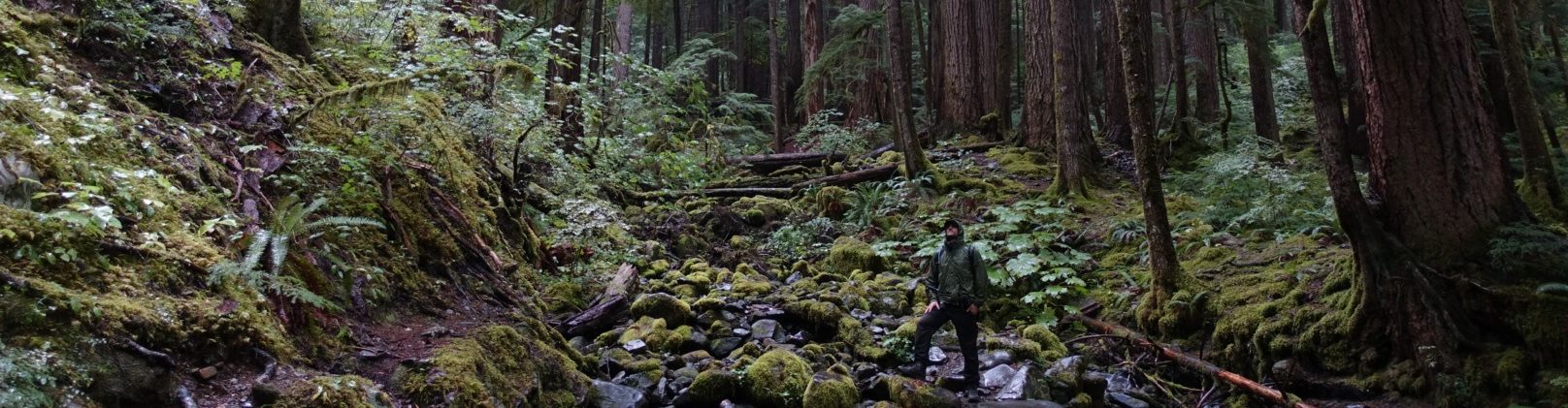
Now that my primary mission is accomplished, I need to get back home somehow.
When I started the trip, I only had some rough ideas ranging from air plane to riding some more stages or taking a bus to the next railway station. From there I would then take a train back to e. g. Helsinki or Stockholm and then a ferry back to Germany. Then bike or train again through Germany.
Due to the unpredictability of this trip, and my lack of planning anything beyond equipment, booking anything in advance was no option.
Before leaving Sweden, where I had 3 GiB of mobile data, I eventually did some research on return strategies, their duration and cost. At this point I had also planned the remaining stages through the less densely populated north. So by then, it was foreseeable when exactly I would finish my primary objective and reach the North Cape, given everything went by plan.
It turned out that all non-plane options would take at least 4 days and probably cost twice as much as flying. From Kiruna in Sweden, there’s a train to Stockholm, and from Finland there’s one to Helsinki. Further north, the only mode of ground transportation are buses.
Flying is fast and comfortable, but on a trip like this, it’s kind of surreal to get to the airport in the morning and to be home for lunch, where you started 4 weeks ago with a bike. That’s faster by roughly a factor of 100.
The other drawback of flying is, well, the bike. Especially on return flights, when there’s no definitive way of packing it up safely. With Scandinavian Airlines, it’s possible to bring an unpacked bike. Only the pedals need to be removed and the handlebar turned by 90 degrees. However, there’s no insurance and if you have ever seen how planes are loaded and unloaded, well, that seems like a perfect idea if you are looking for an excuse to buy a new bike. At least there’s time and possibility to fix the bike after the trip. On outward flights it’s the other way around, you have time and materials to pack everything neatly, but bike damage from flying can endanger the whole trip before it even started.
I decided to fly back, mainly for reasons of time in the face of duties waiting at home. Otherwise I probably would have favoured the train to Helsinki solution for some added bonus adventure.
From my accommodation in Honningsvåg, I took the bus at 6:40 in the morning to Alta. Honningsvåg has a small airport too, but there isn’t a good connection, and it would mean one more load/unload procedure for the bike.
Today was reserved for managing the bike packing problem. I e-mailed the tourist information some days ago and asked for bike shops and other sources of packing material. They sent me a very helpful reply, listing different stores and contact information.
I got out of the bus at Alta’s Airport to ask for the bike-specifics. You also have to register a bike a day before which I already did by mail. Here’s the weight of the bags when I arrived:
- Front: 4.9 kg (Left 2.4 kg, Right 2.5 kg)
- Back: 12.5 kg (Left 6.7 kg, Right 5.8 kg)
- Red bag: 3.2 kg
- Yellow bag: 4.3 kg
- Handlebar bag: 2.7 kg
All in all: 27.6 kg to be distributed in max. 8 kg of hand luggage, and two checked-in bags à 23 kg max, one of which being the bike. The solution follows shortly
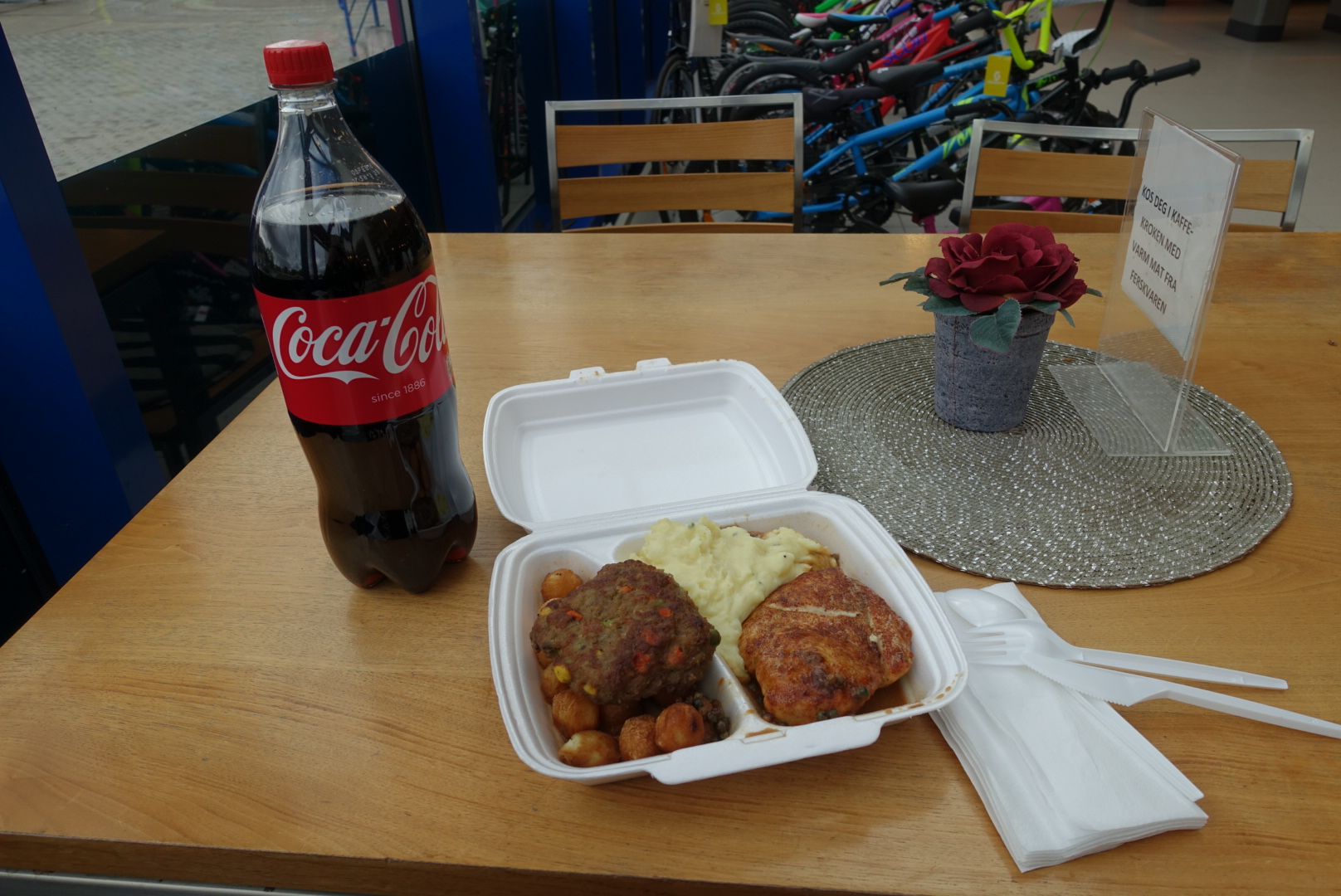
After the airport, I went to the coop mega store again, and got a descent Brunch.
After that, I tried to find an accommodation and ended up renting a room for 800 NOK. The camp site in town was permanently closed, and everything else too far away. The airport was closed at night, so just hanging around there until the morning was no option either.
The next quest on my way home was getting packaging material for the bike. I drove to a bike store and got a cardboard box for free. In a DIY shop, I got 10 m² of bubble wrap, 50 m of duct tape, and some large, stable 120 litre waste bags. Now that’s an interesting packing problem.
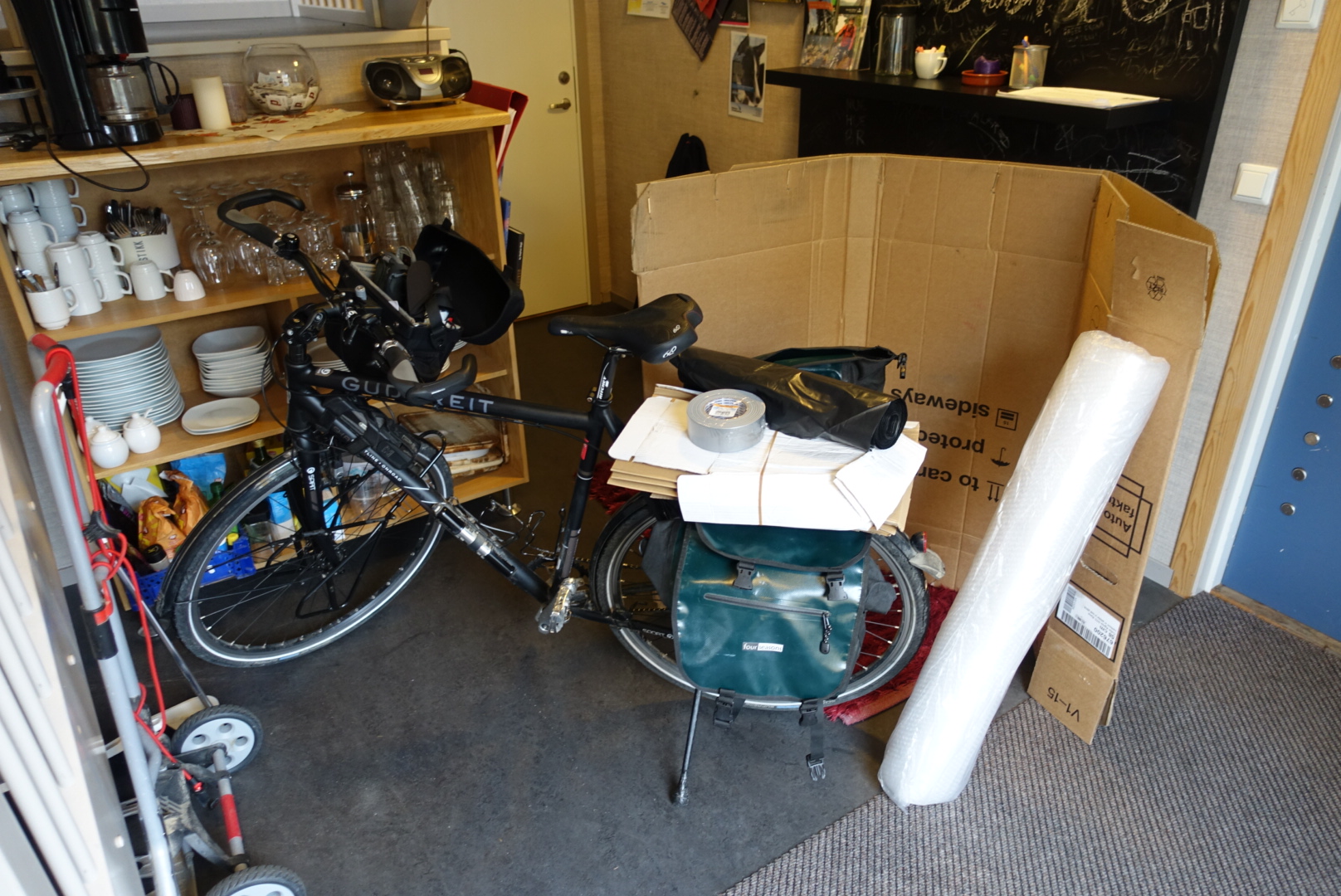
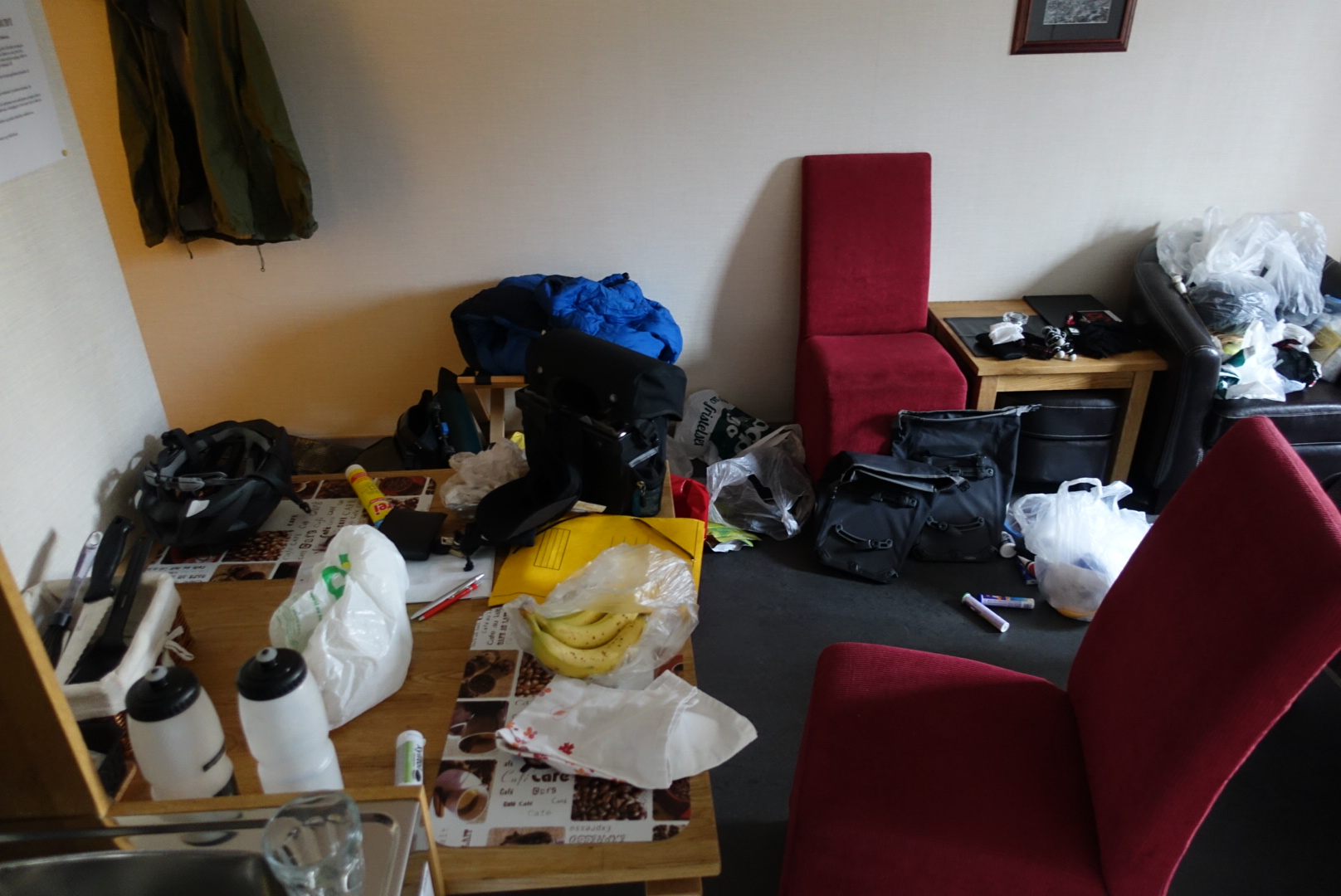
In the room, I had to repack everything into a single 23 kg “bag”.
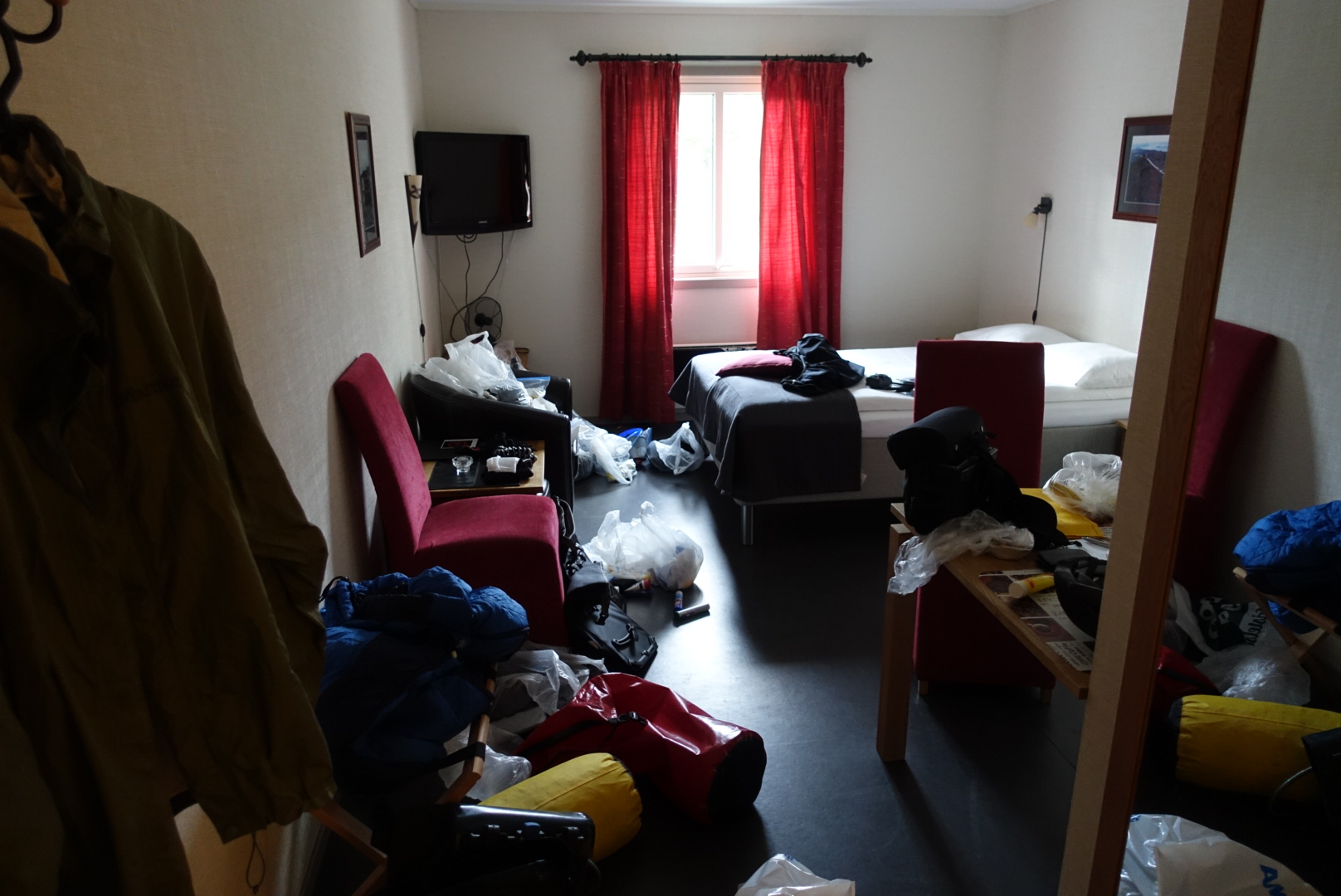
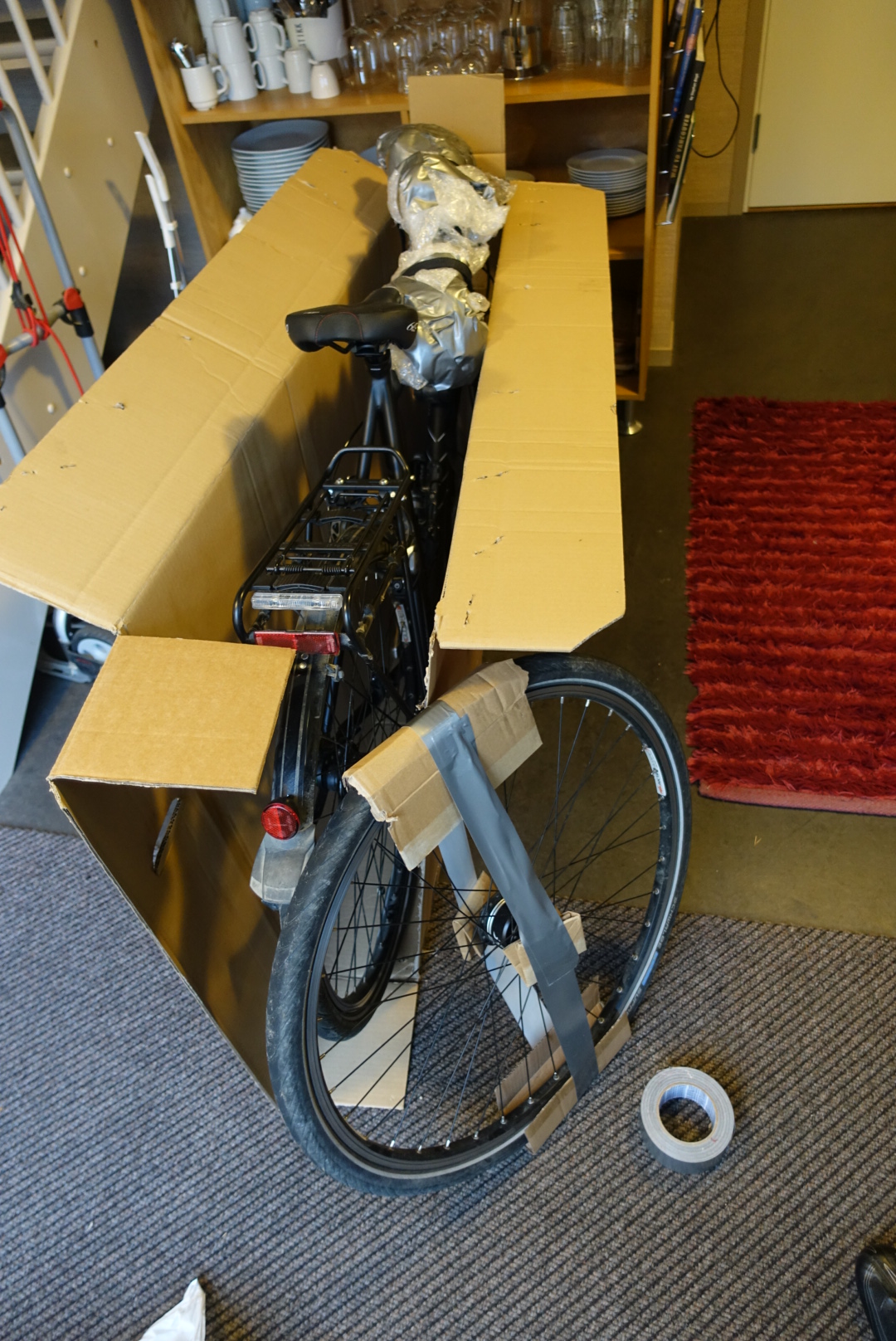
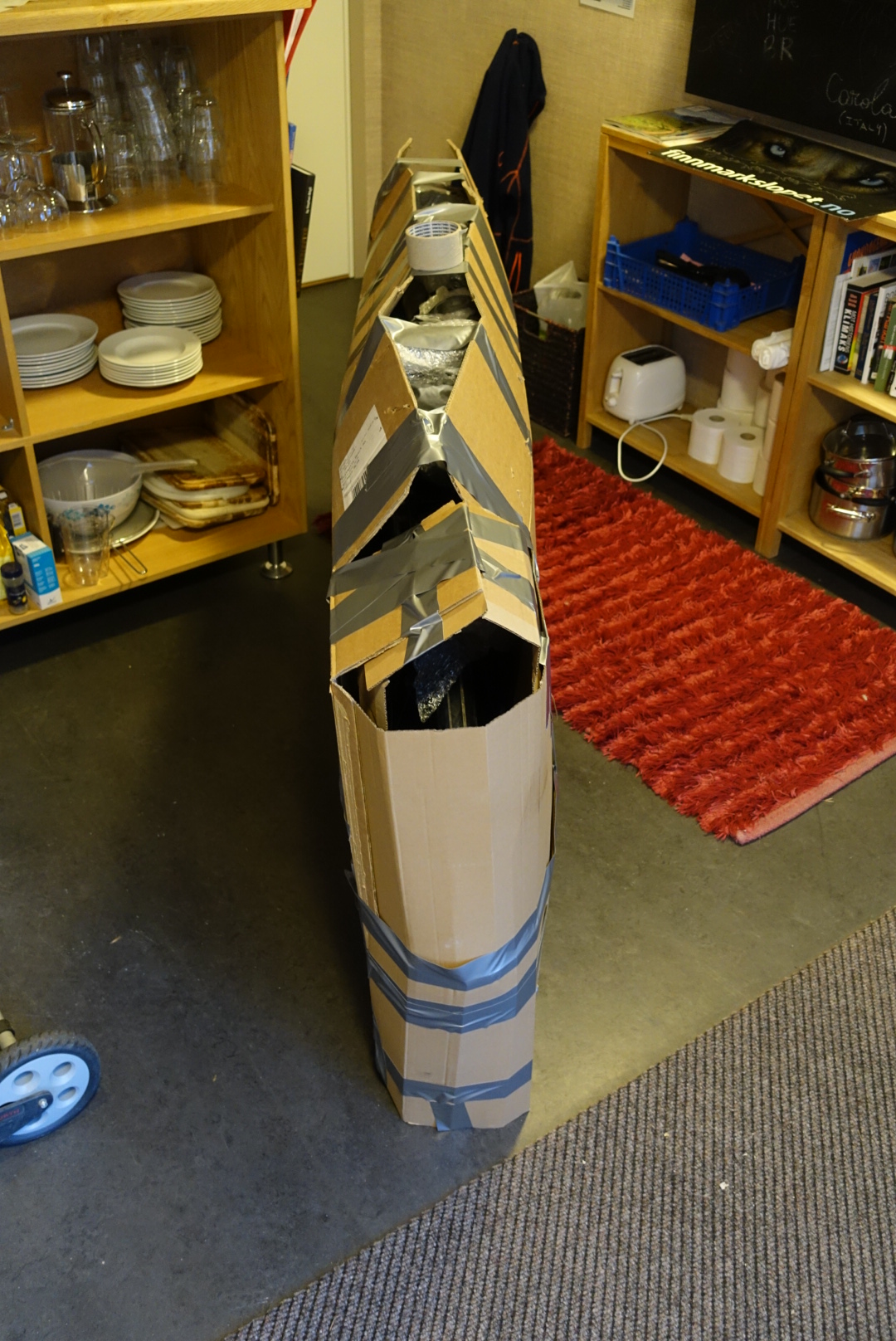
But back to the bike first: The cardboard box was of course too small. I removed the front wheel, loosened the front rack, lowered the saddle and removed the handlebar to get it as compact as possible.
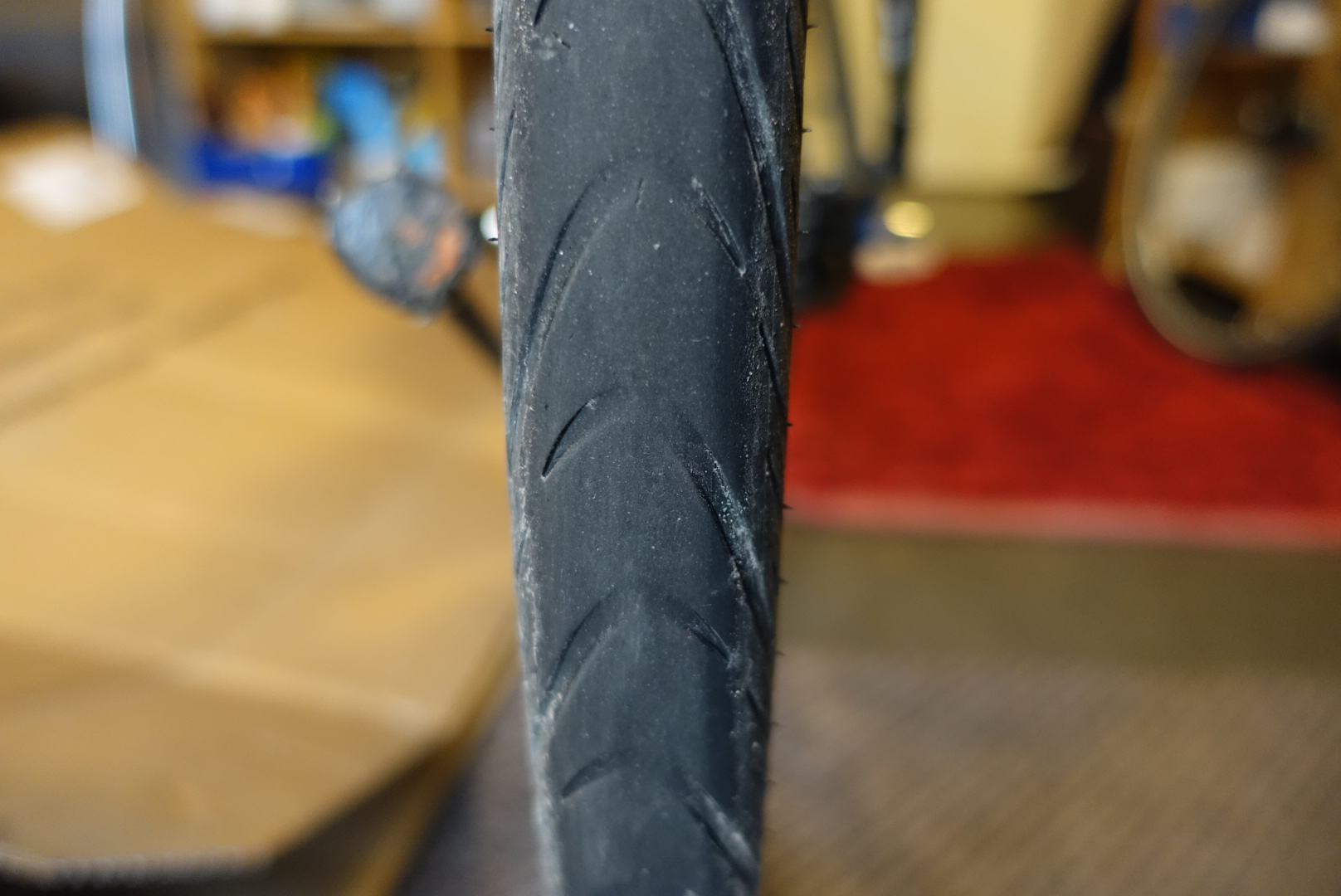
The rear tire had reached its lifetime.
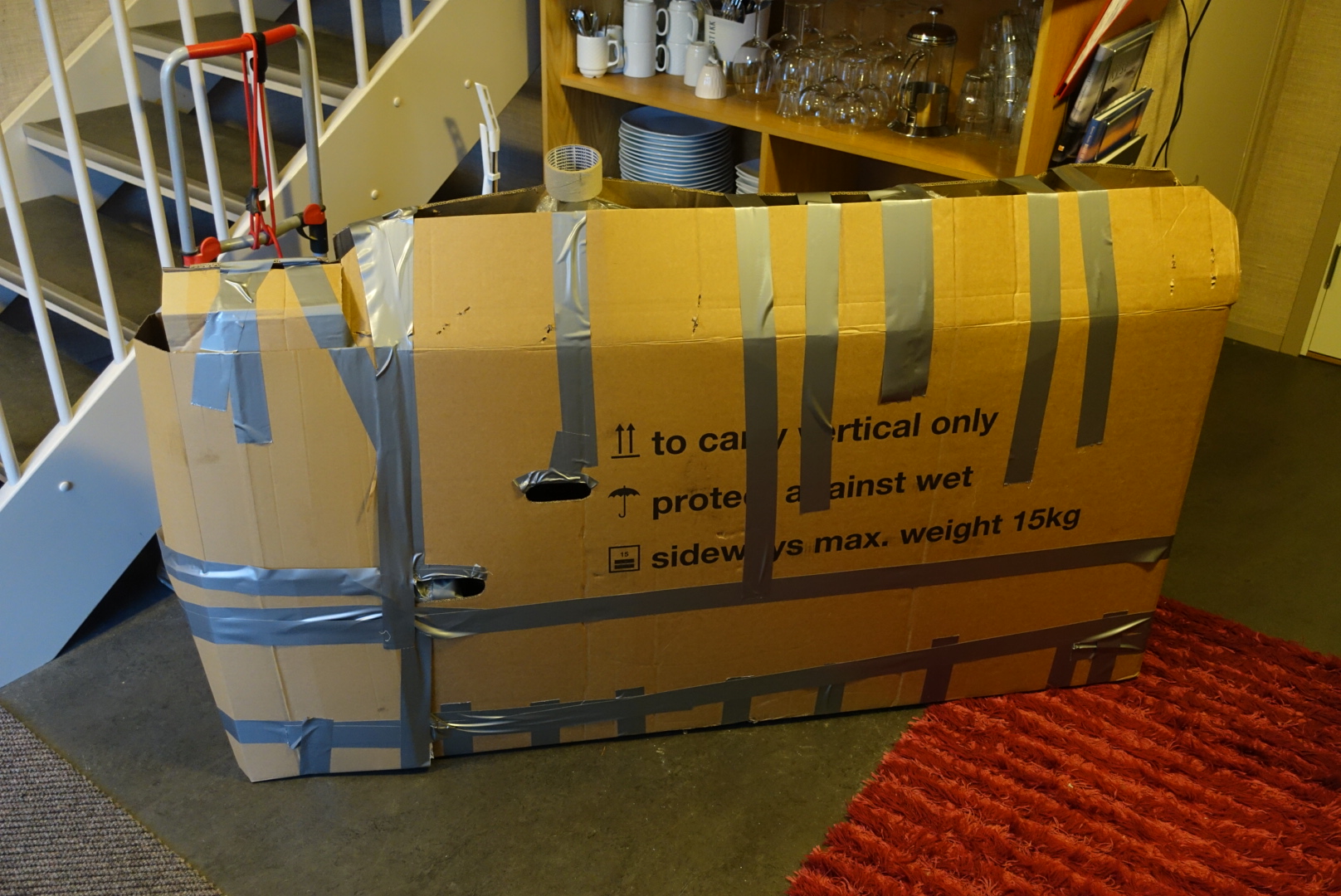
With some additional cardboard and a lot of tape, i.e. all of it, I managed to create this beauty of a package. I included the sleeping mat and bike bottles as further protection, and to not have them in the other luggage.
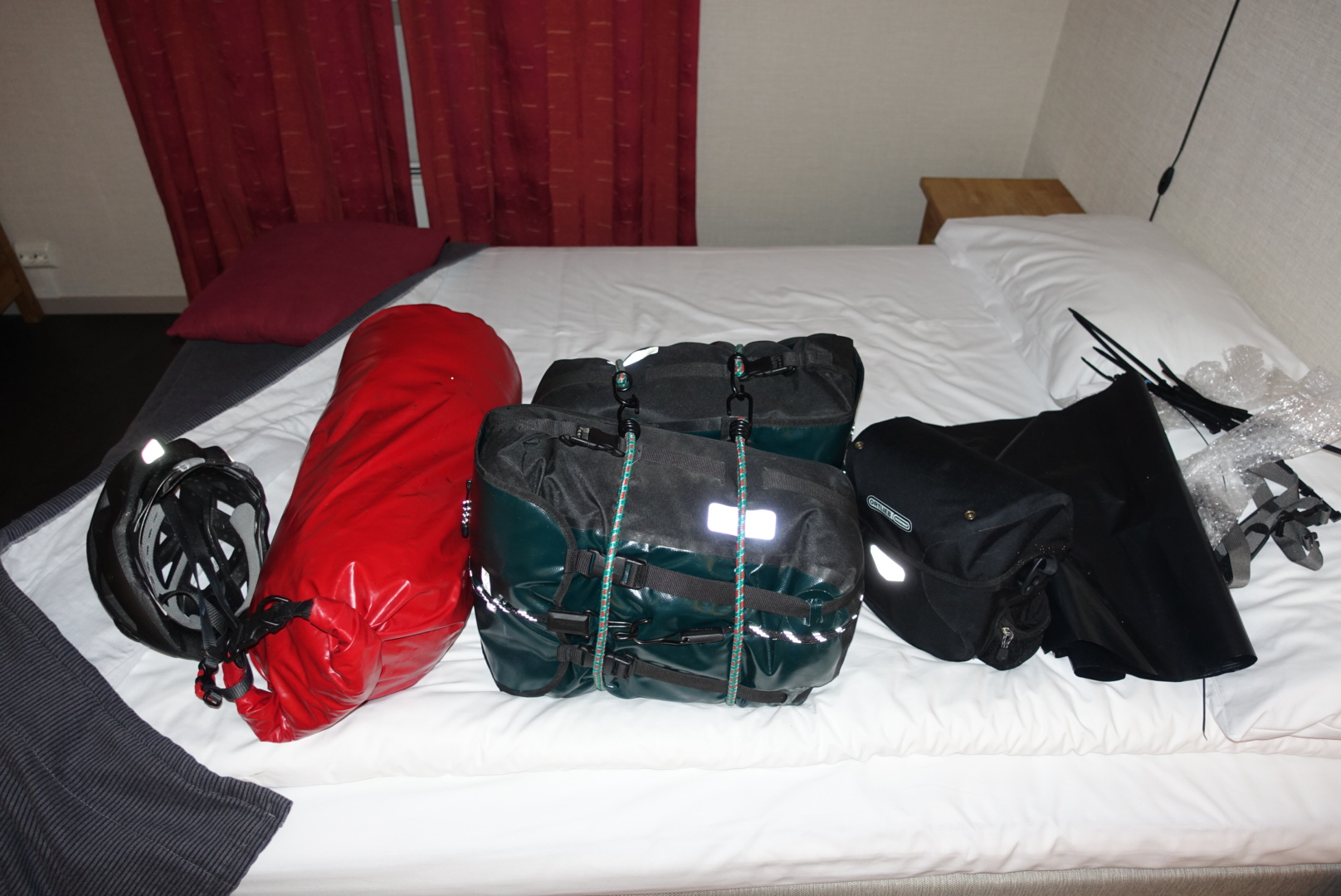
Back in the room, I transformed the chaos from above into this neat package. The tent minus the pegs (not suitable for cabin luggage), the sleeping bag, and the Crocs are in the red bag. Together with the handlebar bag, and the helmet, that’s less than 8 kg of hand luggage roughly meeting the size constraints.
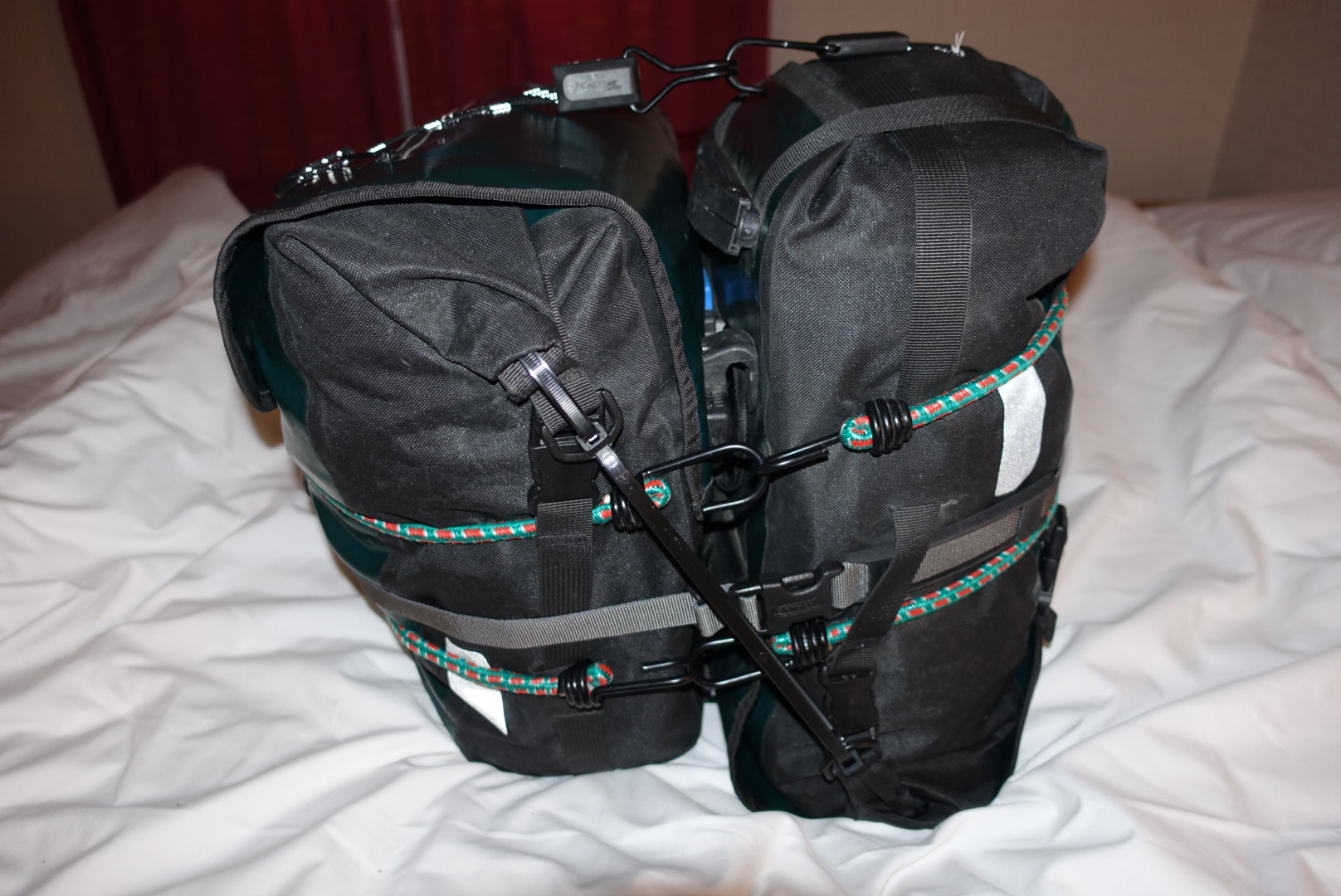
I emptied the front bags and put them into the rear bags. I then packed everything else without any gaps in-between to the rear bags as well. I used some zip ties, and the bungee cords to create a single bag out of both rear bags, …
… added some protection around the bungee cord hooks …
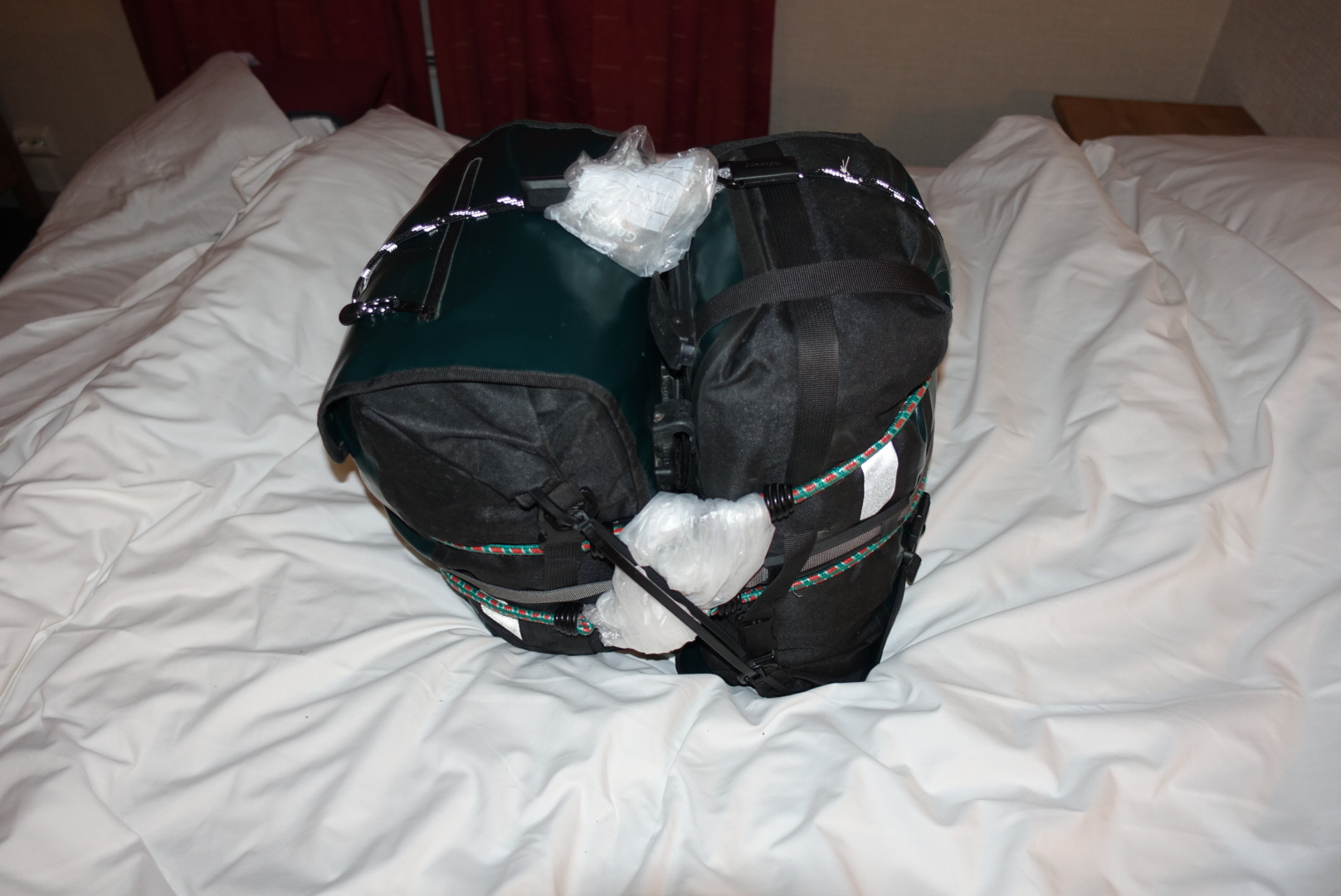
… and packed everything into three layers of waste bags, closed with zip ties. That thing qualifies as a single bag now, less than 23 kg – ready to fly.
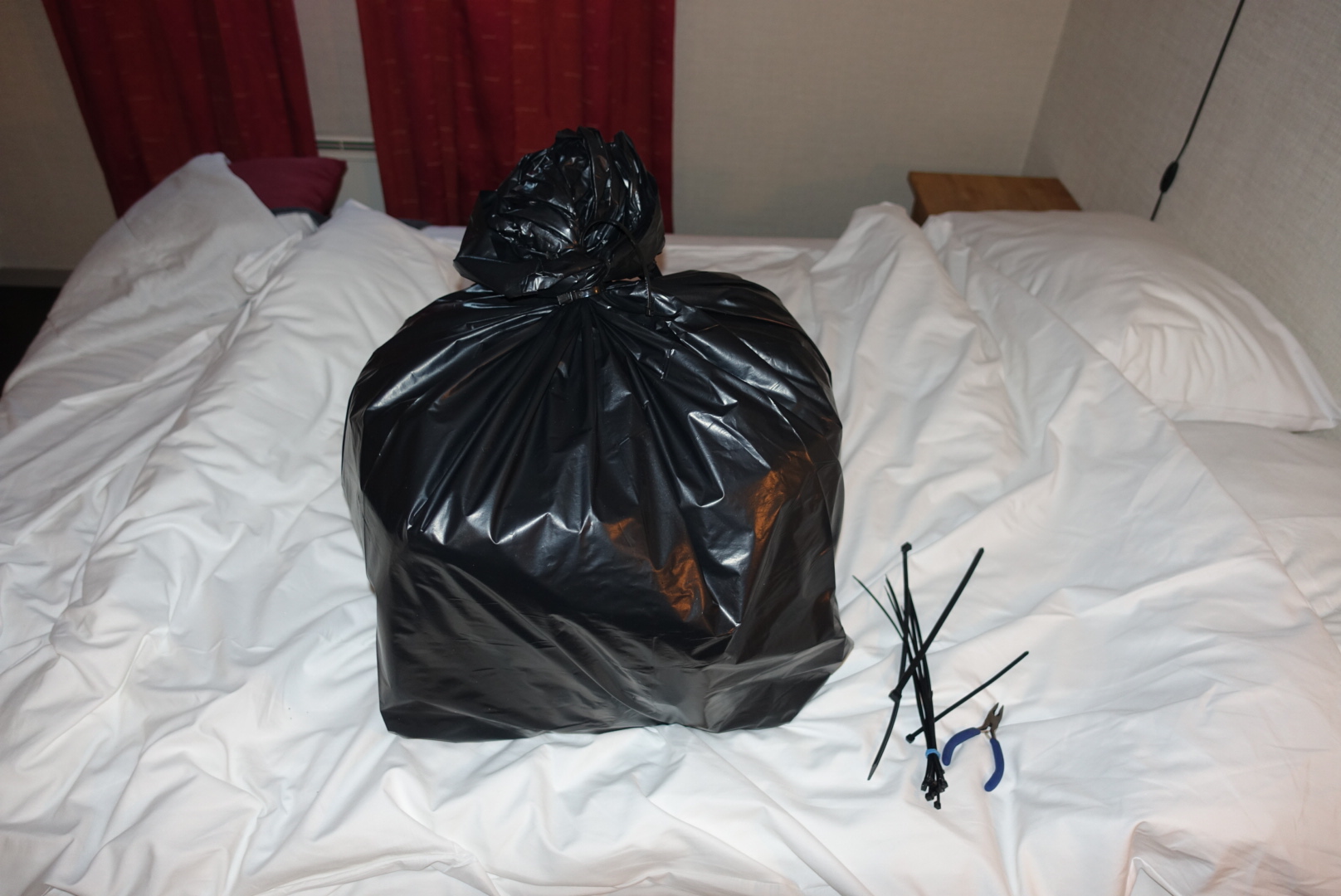
Time to get some sleep. Beside some of the packaging material, I left the big gas cartridge behind, as it is not allowed on planes anyway. I ordered a taxi for the morning to bring me to the airport. There seemed to be a slight language barrier, so I hope he got the big box with a bike thing right.